
Canvas Alternatives: Fine Art Print Options for 2026
Table of Contents
- Why Collectors Are Reconsidering Canvas Alternatives
- Metal vs Acrylic vs Canvas Prints: Material Comparison
- Benefits of Limited Edition Fine Art Prints
- Archival Quality and Long-Term Durability
- How to Choose Professional Wall Art for Home
- Installation and Mounting Guides for Different Substrates
- Frequently Asked Questions
Last Updated: September 22, 2026
Why Collectors Are Reconsidering Canvas Alternatives
The landscape of fine art wall display has shifted dramatically. What once seemed like the obvious choice, canvas prints, now competes with materials that offer superior durability, color accuracy, and visual impact. Collectors and homeowners are asking harder questions about what actually works best for their spaces, especially when investing in professional landscape and wildlife photography.
The reason is straightforward: canvas alternatives deliver what canvas sometimes cannot. Metal prints reflect light with gallery-grade precision. Acrylic provides museum-quality clarity. Fine art paper preserves detail with archival integrity. Each substrate tells a different story when displaying the raw beauty of landscape photography.
This guide explores why that matters and which alternatives genuinely deserve consideration for your home.
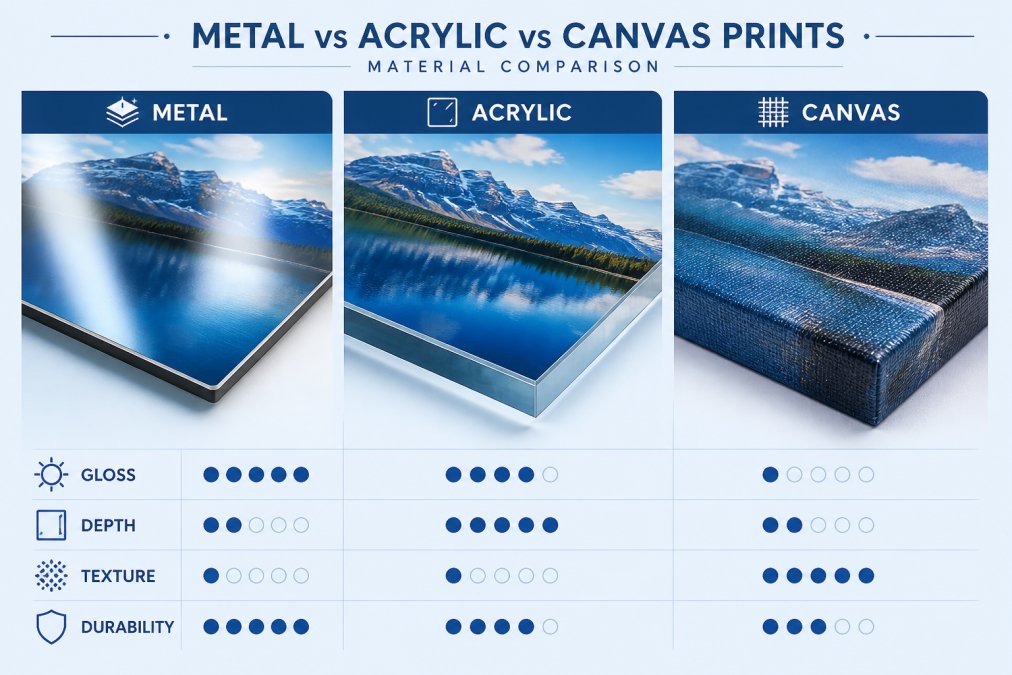
Metal vs Acrylic vs Canvas Prints: Material Comparison
Three materials dominate professional fine art display today, and each excels in different ways. Understanding their actual strengths, not marketing claims, helps you choose the right one for your space and your photograph.
Metal Prints: Durability and Visual Impact
Metal prints mount directly onto aluminum sheets, creating a surface that's virtually indestructible. The photograph fuses into the metal substrate itself, meaning the image cannot peel, crack, or separate over time. This is the core advantage: permanence.
The visual result is striking. Metal amplifies color saturation and contrast in ways other substrates cannot match. Blacks go deeper. Highlights glow. This makes metal exceptional for landscape photography with dramatic skies or wildlife with rich detail. The reflective surface catches ambient light, creating a three-dimensional quality that draws the eye.
Setup is simple. Metal prints arrive ready to hang with a floating frame system that sits 1.25 inches from the wall, allowing light to pass behind the image. No additional framing required. The installation takes minutes, just a level and wall anchors.
The trade-off: metal isn't ideal for every aesthetic. Modern, minimalist, and contemporary spaces thrive with metal. Traditional or rustic interiors sometimes feel mismatched. Metal also reflects room light, which can create glare in certain positions. This is manageable but worth considering before purchase.
Acrylic Prints: Clarity and Modern Aesthetics
Acrylic sits between metal and canvas in durability and sits above both in visual clarity. The photograph prints directly onto the back of a clear acrylic sheet, then mounted to a white or black backing board. What you see is pure image depth, the acrylic acts as a protective lens that magnifies detail.
Colors pop with museum-grade accuracy. Fine details in landscape photography, texture in rock formations, individual leaves, atmospheric perspective, emerge with precision that canvas cannot deliver. For wildlife photography, acrylic renders fur, feathers, and eyes with stunning definition.
Acrylic also resists fading better than canvas. UV-resistant acrylic sheets protect the print underneath, extending the photograph's lifespan significantly. Dust and moisture cannot penetrate. If you live in humid climates or spaces with direct sunlight, acrylic outperforms canvas every time.
The aesthetic is contemporary and clean. Acrylic works in modern homes, offices, and minimalist spaces. It creates a floating effect similar to metal but with softer visual presence. The material feels premium without the reflective intensity of metal.
Installation requires slightly more care than metal. Acrylic is heavier and needs secure mounting. The floating frame system works similarly to metal, but the weight demands proper wall anchors rated for the size and weight of your print.
Fine Art Paper Prints: Traditional Quality
Fine art paper represents the traditional approach, but "traditional" doesn't mean outdated. Museum-quality papers, cotton rag papers, baryta papers, and fine art papers specifically engineered for photography, deliver archival longevity that rivals metal and acrylic.
The aesthetic is unmistakably fine art. Paper has warmth that metal and acrylic lack. Matte finishes eliminate glare entirely, creating an intimate viewing experience. The texture of the paper itself becomes part of the image presentation. For landscape photography, this creates a contemplative quality that resonates in homes and galleries alike.
Archival papers are designed to last 100+ years without fading or deterioration when stored and displayed properly. The inks used, typically pigment-based rather than dye-based, contribute to this longevity. This is why fine art photographers and galleries still choose paper for serious work.
The limitation is practical. Paper requires framing under glass for protection. Dust, humidity, and accidental contact damage the surface. This adds cost and complexity compared to metal or acrylic. The frame itself becomes a design element that must complement both the photograph and your space.
Benefits of Limited Edition Fine Art Prints
Limited edition prints create scarcity and value in ways mass-produced alternatives cannot. When a photographer commits to producing only 50 or 100 prints of an image, each print becomes more meaningful. Collectors understand they own something genuinely limited, not one of thousands.
This distinction matters for several reasons. First, limited editions preserve the photograph's artistic integrity. The photographer controls quality, materials, and presentation. Every print receives the same attention and care. This contrasts sharply with mass-market print-on-demand services, where standardization overrides individual craftsmanship.
Framed Matte Canvas Print — Colorful →
Second, limited editions can create a sense of exclusivity. As prints sell out, remaining copies become harder to find.
Third, limited editions support the photographer directly. When you purchase a limited edition print from a professional like Bob Clark Photography, you're supporting the work that created it.

The practical benefit: limited editions often come with documentation, such as a certificate of authenticity or the edition number. This documentation can help confirm the print's legitimacy.
Archival Quality and Long-Term Durability
Archival quality is not marketing language, it's a measurable standard. Archival prints are engineered to resist fading, yellowing, and deterioration for 50, 75, or 100+ years under normal display conditions.
The factors that determine archival quality are specific. Pigment-based inks (not dye-based) fade far more slowly. Acid-free papers and substrates prevent chemical degradation. UV-resistant coatings on acrylic and metal protect against light damage. These aren't optional upgrades; they're foundational to any print designed to last.
Professional photographers often choose archival materials to help ensure the longevity of their work.
When evaluating any fine art print, whether metal, acrylic, or paper, ask about the specific materials. What inks are used? Is the substrate acid-free? Are UV protections included? The answers determine whether your print will look the same in 20 years or show visible degradation.
Metal prints fused directly into aluminum substrates are designed for durability. Acrylic with UV-resistant coatings and pigment-based inks is designed for longevity. Fine art papers combined with pigment inks and proper framing are a traditional choice for longevity.
How to Choose Professional Wall Art for Home
Selecting the right print for your space requires honest assessment of three factors: the photograph itself, your room's light and style, and the substrate that will display it best.
Start with the photograph. Professional landscape and wildlife photography demands a specific aesthetic. Does the image match your interior design? A moody mountain landscape suits contemporary minimalism. A vibrant wildlife portrait complements eclectic or bohemian spaces. The photograph should feel intentional in your home, not like decoration that happened to fit the wall.
Next, evaluate your room's lighting. Direct sunlight favors acrylic or fine art paper, metal can create glare that diminishes the image. Indirect or ambient light works with all three materials. Consider the wall color too. Dark walls make metal and acrylic pop. Light walls provide neutral backgrounds that let fine art paper shine.
Think about permanence. If you're renting or frequently rearranging, paper framed behind glass offers flexibility. If you're committed to a wall for years, metal or acrylic justify the investment. These materials are built for stability and long-term display.
Size matters more than most people realize.
Installation and Mounting Guides for Different Substrates
Installation varies significantly by substrate, and getting it right protects your investment.
General Best Practices:
- Use a stud finder to locate wall studs when possible. Mounting into studs provides maximum security.
- For drywall without studs, use heavy-duty anchors rated for the print's weight.
- Always use a level. Crooked prints diminish even the finest artwork.
- For valuable or large prints, consider professional installation.
- Test the mounting system with the frame before drilling holes.
Frequently Asked Questions
What are the best alternatives to canvas prints for landscape photography?
Metal, acrylic, and fine art paper prints each offer distinct advantages over canvas. Metal prints deliver superior durability and vibrant color saturation ideal for bold landscape imagery. Acrylic provides museum-quality clarity and modern aesthetics perfect for high-resolution photography. Fine art paper prints maintain traditional archival quality and offer the soft, gallery-style finish many collectors prefer. Your choice depends on your space, lighting conditions, and whether you prioritize visual impact or longevity, professional landscape photographers often choose based on the specific image's color palette and composition.
Why would I choose metal or acrylic prints over traditional canvas?
Metal prints are designed to resist moisture and fading, making them suitable for various environments. Acrylic prints can offer clarity and light transmission. If you're investing in limited edition landscape photography, these alternatives can offer different long-term benefits.
How do I know if a print is truly archival quality?
Look for prints made with acid-free substrates, UV-resistant inks, and materials designed for longevity. Pigment-based inks are often used for fine art prints. You can inquire about the specific printing methods and materials used, and whether the substrate and inks have been tested for light-fastness ratings. Limited edition prints may include documentation of their specifications.
What size print should I order for my living room?
Start by measuring your wall space and considering viewing distance. A general rule: the print's width should be 50-75% of your furniture width. For a 7-foot sofa, aim for a 36-48 inch wide print. Consider the room's natural light, larger prints can show detail well in well-lit spaces. If you're uncertain, starting with a medium size (24×36 inches) can be a good approach. Multiple size options are often available to suit different spaces.