
Mickey Shannon vs Jess Lee: Landscape Photography Compared
Table of Contents
- Who Are Mickey Shannon and Jess Lee?
- Artistic Vision and Photography Style
- Technical Execution and Print Quality
- Best Landscape Photography for Home Decor
- How to Choose Wall Art for Living Rooms
- Authenticity and Creative Process
- Which Photographer's Work Is Right for You?
- Frequently Asked Questions
Last Updated: September 19, 2026
Who Are Mickey Shannon and Jess Lee?
Landscape photography has become a thriving field, with artists building devoted followings through distinct visual styles and technical mastery. Two names that often come up in discussions of high-quality landscape and wildlife imagery are Mickey Shannon and Jess Lee. Both photographers have cultivated reputations for capturing natural beauty, though their approaches, subject matter, and artistic philosophies differ in meaningful ways.
Mickey Shannon built a career around black-and-white landscape photography, transitioning to this monochromatic style after beginning the shift in 1985. This move reflected a deliberate choice to align artistic vision with medium, creating a distinctive visual language that emphasizes form, texture, and contrast over color. Jess Lee, by contrast, has focused on wildlife and landscape photography that often incorporates natural color, bringing a different sensibility to capturing the natural world.
For collectors and homeowners seeking landscape photography for their spaces, understanding these two photographers' distinct approaches matters. The choice between them isn't just about preference, it's about which artistic vision will resonate in your home and match your decorating goals.
Artistic Vision and Photography Style
Mickey Shannon's Approach to Landscape Photography
Mickey Shannon's commitment to black-and-white photography represents a deliberate artistic choice that shapes every image he creates. Beginning the transition to monochromatic work in 1985, Shannon developed a signature style that prioritizes tonal range, compositional geometry, and the interplay of light and shadow. Black-and-white work removes the distraction of color and forces viewers to engage with form, texture, and contrast in their purest forms.
Shannon's portfolio emphasizes:
- Mountain and geological formations: Stark, high-contrast images that reveal rock structure and erosion patterns
- Atmospheric conditions: Fog, mist, and cloud formations that create dramatic tonal gradations
- Compositional rigor: Strong leading lines, rule-of-thirds framing, and deliberate negative space
- Tonal mastery: Full-spectrum prints from pure black to pure white with smooth mid-tone transitions
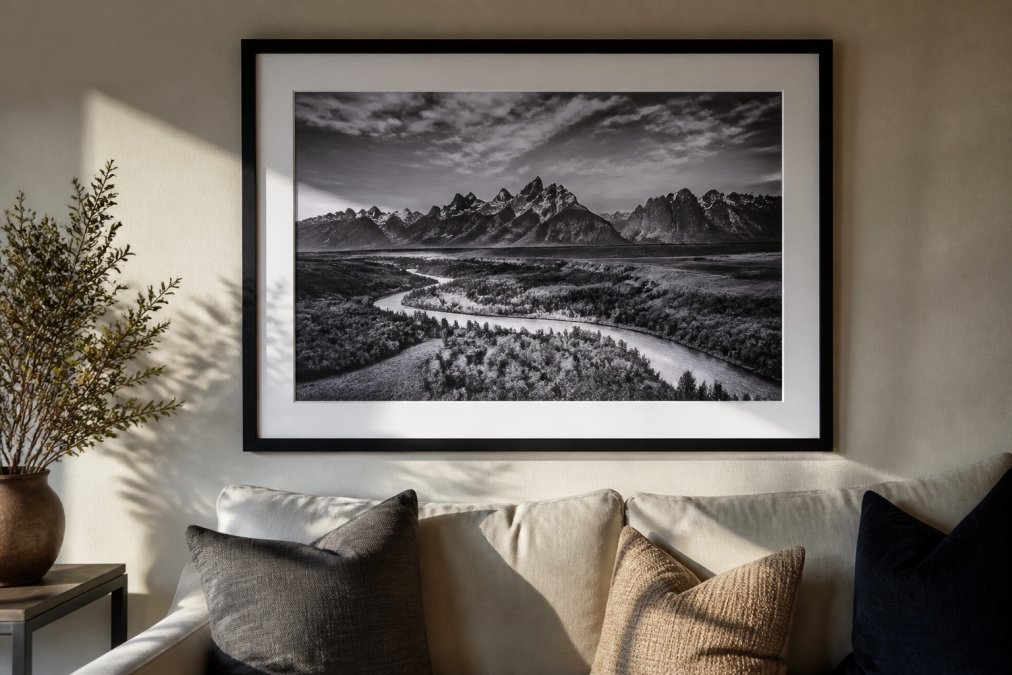
The technical execution in black-and-white photography demands precision. Exposure must be perfect because there's no color correction to mask mistakes. Contrast becomes the primary tool for creating visual interest and guiding the viewer's eye through the composition. These constraints actually push photographers toward stronger composition and more intentional image-making. Shannon's work demonstrates how monochromatic imagery can convey mood and emotion with striking power. Viewers focusing on landscape form, geological features, and atmospheric conditions find black-and-white work particularly compelling. This style appeals to collectors who appreciate fine art photography and want pieces that feel timeless rather than trendy.
Jess Lee's Wildlife and Landscape Focus
Jess Lee approaches landscape and wildlife photography with an emphasis on capturing authentic moments in natural settings, typically incorporating natural color to preserve the visual experience of being in those environments. This work often includes vibrant greens, blues, and earth tones that bring dimensional depth to wall displays. Wildlife photography requires different skills than pure landscape work: patience, understanding animal behavior, the ability to react quickly to fleeting moments, and technical mastery of fast shutter speeds and precise focus tracking.
Lee's portfolio emphasizes:
- Wildlife in habitat: Animals photographed in their natural environments rather than controlled settings
- Regional character and landscape context: Images that showcase specific geographic features and seasonal conditions
- Color saturation and warmth: Prints that feel like windows into actual places rather than purely artistic interpretations
- Behavioral documentation: Authentic wildlife moments that reveal animal activity and interaction
- Seasonal variation: Work that captures how landscapes and wildlife populations change throughout the year
The wildlife photography community has faced increased scrutiny regarding authenticity in recent years.
Technical Execution and Print Quality
The difference between these two photographers extends beyond artistic vision into technical execution and how their work translates to physical prints. Print quality determines whether an image looks as compelling on your wall as it does on screen.
When evaluating landscape photography for your home, consider:
- Print resolution and sharpness at the size you're buying
- Paper type and finish (matte, semi-gloss, glossy)
- Color accuracy for color work or tonal range for black-and-white
- Longevity and fade resistance
- Framing options and mounting quality
Best Landscape Photography for Home Decor
Choosing the best landscape photography for your space depends on your existing décor, lighting, and personal preference. Black-and-white imagery works well in modern, minimalist, and contemporary spaces where it can serve as a dramatic focal point. The tonal qualities complement neutral color palettes and create visual interest without competing with furniture or other décor elements.
Consider the mood you want to create:
- Serene and contemplative: Black-and-white landscapes with soft tones
- Energetic and vibrant: Color-rich wildlife and landscape scenes
- Bold and dramatic: High-contrast black-and-white or saturated color work
- Calming and natural: Soft landscape imagery with gentle tones
How to Choose Wall Art for Living Rooms
Selecting wall art for living rooms requires thinking about more than just the image itself. Your living room serves as the primary gathering space in most homes, so the art you choose sets the tone for how people experience that room.
Lighting in your room affects how prints appear:
- Natural light: Shows true colors but can create glare on glossy finishes
- Warm artificial light: May shift color perception, especially for cool-toned images
- Bright overhead light: Works well for bold, high-contrast imagery
- Soft ambient light: Suits subtle, tonal work like black-and-white photography
Authenticity and Creative Process
Trust in photography has become increasingly important as digital tools make image manipulation easier. Understanding an artist's creative process helps collectors evaluate whether their work represents authentic documentation or heavily altered interpretations. For users searching to distinguish between Mickey Shannon and Jess Lee, examining their respective approaches to authenticity reveals meaningful philosophical differences.
Mickey Shannon's Fine Art Philosophy
Mickey Shannon's black-and-white work operates within a fine art tradition where post-processing and creative interpretation are considered legitimate artistic tools. Black-and-white conversion itself is a form of interpretation, the photographer chooses which color information becomes which tonal value, fundamentally reshaping how the scene is perceived. Shannon's approach typically involves:
- Intentional tonal mapping: Converting color information into grayscale in ways that emphasize specific compositional elements
- Contrast enhancement: Deliberately increasing or decreasing contrast to create mood and visual drama
- Texture emphasis: Using processing to reveal or highlight surface details in rock, water, and vegetation
- Artistic abstraction: Accepting that black-and-white conversion creates an interpretation rather than a literal documentation
Jess Lee's Documentary Approach
Jess Lee's wildlife and landscape photography emphasizes documentary integrity, capturing scenes as they appear in nature with minimal manipulation. This approach prioritizes:
- Authentic color representation: Preserving natural color values without saturation enhancement or color grading
- Behavioral documentation: Capturing genuine wildlife moments without baiting, staging, or manipulation
- Minimal post-processing: Adjusting exposure and contrast to correct for camera limitations rather than to create artistic effects
- Transparency about location and conditions: Providing context about when, where, and under what conditions images were captured
Evaluating Authenticity for Your Purchase
If you value artistic interpretation and fine art tradition, Mickey Shannon's approach delivers sophisticated visual statements where post-processing is part of the artistic vision. The question isn't "Is this real?" but "Is this a compelling artistic statement?"
When evaluating either photographer's work:
- Review their artist statement and explicit creative philosophy
- Look for before-and-after examples or process documentation when available
- Consider whether the work feels authentic to the locations or wildlife depicted
- Research their background, training, and any published interviews about their approach
- Check how they describe their editing process and what tools they use
- Understand whether they prioritize artistic interpretation or documentary accuracy
Which Photographer's Work Is Right for You?
The choice between Mickey Shannon and Jess Lee ultimately depends on your aesthetic preferences, décor goals, and what draws you emotionally to landscape photography.
Choose Mickey Shannon's black-and-white work if you:
- Prefer timeless, classic aesthetics
- Want art that complements modern or minimalist décor
- Appreciate fine art photography and tonal mastery
- Seek pieces that emphasize composition and form over color
- Want imagery that works in formal or sophisticated spaces
Choose Jess Lee's color landscape and wildlife photography if you:
- Want to bring natural warmth and color into your home
- Appreciate documentary-style wildlife imagery
- Prefer work that feels like a window into real places
- Want art that connects you to specific locations or animals
- Seek pieces with vibrant, energetic qualities
Frequently Asked Questions
What defines high-quality landscape photography for home decor?
Professional landscape photography for wall art combines sharp detail, accurate color representation, and compositional balance. Look for prints with vibrant yet natural tones, proper exposure across the entire image, and resolution that holds detail even in large formats. The best landscape photography for home decor uses leading lines, layered depth, and lighting that complements your room's aesthetic. Verify that prints come from original photography rather than stock images, ensuring authenticity and uniqueness in your space.
How do Mickey Shannon and Jess Lee differ in their photography approach?
Mickey Shannon and Jess Lee represent distinct artistic philosophies within landscape and wildlife photography. Their stylistic differences, from composition techniques to subject matter selection, reflect different creative visions. Understanding these differences helps you choose work that aligns with your personal taste and home decor goals. Both photographers have developed dedicated followings, but their methods, technical execution, and thematic focuses offer collectors meaningful alternatives when selecting fine art prints.
What should I consider when choosing wall art for living rooms?
When selecting wall art for living rooms, measure your wall space first and choose prints that create visual balance without overwhelming the room. Consider your existing color palette, does the landscape photography complement or contrast with your furnishings? Think about the mood you want to create: serene mountain vistas promote calm, while dramatic wildlife imagery adds energy. Scale matters too; a small print on a large wall looks lost, while oversized art can dominate the space. Match the frame style to your décor, and ensure the print quality justifies the investment through professional reproduction and archival materials.
How can I verify that landscape photography prints are authentic and high-quality?
Authentic landscape photography prints should come directly from the photographer or authorized sellers who provide provenance information. Check for technical specifications: archival-grade paper, professional printing methods, and color accuracy that matches the original image. Ask whether the work is an original photograph taken by the artist or a licensed reproduction. Read customer reviews about print durability and color fidelity, and verify return policies in case the print doesn't meet your expectations when it arrives. Professional photographers typically document their creative process and provide information about where and when their images were captured.