
Is Buying Photography Prints Online Worth It in 2026?
Table of Contents
- The Real Cost of Buying Photography Prints Online
- How to Evaluate Fine Art Print Quality Before You Buy
- Limited Edition vs Open Edition Photography Prints
- Museum Quality Landscape Photography Prints in 2026
- Consumer Lab vs. Professional Printing: What Actually Changes
- Print Longevity and Real ROI for Your Home
- Frequently Asked Questions
Last Updated: September 17, 2026
The Real Cost of Buying Photography Prints Online
Buying photography prints online is worth it when print quality, longevity, and total delivered cost beat what a local lab or big-box store can offer. The global photo book market hit roughly $3.62 billion in 2026 and is projected to reach $5.61 billion by 2034, a 5.61% compound annual growth rate, according to My Scrapbook Studio's 2026 photo book industry statistics. People still want physical art on their walls.
Print Cost vs. Framing, Shipping, and Installation
Framing is where budgets quietly double. A standard 16x24 inch print might cost $30 to $60 unframed, while a framed and matted version runs several times that once you factor in materials and assembly. Shipping adds another layer: glass and rigid frames need protective packaging that rolled prints do not.
| Cost Component | Typical Share of Total | What Drives It |
|---|---|---|
| Print itself | 20-30% | Paper type, size, edition |
| Framing and matting | 35-45% | Frame material, glass, mat board |
| Shipping and packaging | 10-15% | Size, glass, distance |
| Installation hardware | 5-10% | Weight, wall type |
How to Evaluate Fine Art Print Quality Before You Buy
Fine art print quality comes down to three measurable things: paper weight, finish, and color accuracy. Get them right and the print matches the photograph you saw on screen; get them wrong and you will notice within the first week.
Paper Weight, Finish, and Color Accuracy
Finish changes how a print reads in a room. Matte and lustre diffuse reflections, which matters opposite a window. Glossy delivers deeper blacks but acts like a mirror under direct light. For landscape work, lustre is the practical middle ground: rich color without glare.
Here is a quick pre-purchase checklist:
- Confirm paper weight is 250 gsm or higher
- Ask which finish is used and whether it is matte or lustre
- Check the source resolution is at least 300 dpi at print size
- Verify the aspect ratio matches standard frame sizes
- Look for archival or giclée printing language, not just "photo print"
Limited Edition vs Open Edition Photography Prints
Limited edition prints are produced in a fixed, numbered run; open edition prints can be reproduced indefinitely. That distinction drives most of the price gap between a $40 print and a $400 one. But the label alone does not justify the premium, what matters is the run size, how the edition is documented, and whether the artist must stop printing when it sells out.
What Actually Makes a Limited Edition Worth the Premium
Three things separate a real limited edition from a decorated open edition:
- A stated run size. "Edition of 25" or "Edition of 150" is a commitment. "Limited time offer" is not. The smaller the run, the higher the per-print price, because the photographer spreads the same shoot, edit, and proofing cost across fewer sales.
- Numbering and signature. A legitimate limited edition is marked like "12/50" in the margin or on a certificate, and signed by the photographer. The number is what makes each print individually identifiable.
- A certificate of authenticity (COA). This is the document that ties the physical print to the artist and the edition. Without it, resale is nearly impossible because a buyer has no way to confirm the print is part of the run.
The Resale Reality Most Buyers Get Wrong
Limited edition photography does not appreciate the way numbered sculptures sometimes do. The secondary market for photography is thin and dominated by a few blue-chip names. For an emerging or regional photographer, a limited edition print is a collectible you enjoy owning, not an investment you expect to flip.
How to Verify an Edition Before You Buy
- Confirm the exact run size in writing on the product page or COA
- Check that the print is numbered (e.g., "12/50") and signed
- Ask whether a certificate of authenticity is included
- Confirm the edition is closed, the artist will not print more once it sells out
- Compare the limited and open edition paper, ink, and size to see what the premium actually buys
| Feature | Limited Edition | Open Edition |
|---|---|---|
| Quantity | Fixed, numbered run | Unlimited |
| Price | Higher (often 2-5x) | Lower |
| Signature | Often signed | Rarely signed |
| Documentation | COA and edition number | Usually none |
| Resale value | Can hold value for established names; thin market otherwise | Minimal |
| Best for | Collectors who value scarcity and provenance | Decor and gifts |
Museum Quality Landscape Photography Prints in 2026
Museum quality landscape photography prints in 2026 are defined less by a single standard than by production choices: archival inks, acid-free papers, and printing methods built to last decades. The term gets thrown around loosely, so know what earns it, and how to verify it before you spend.
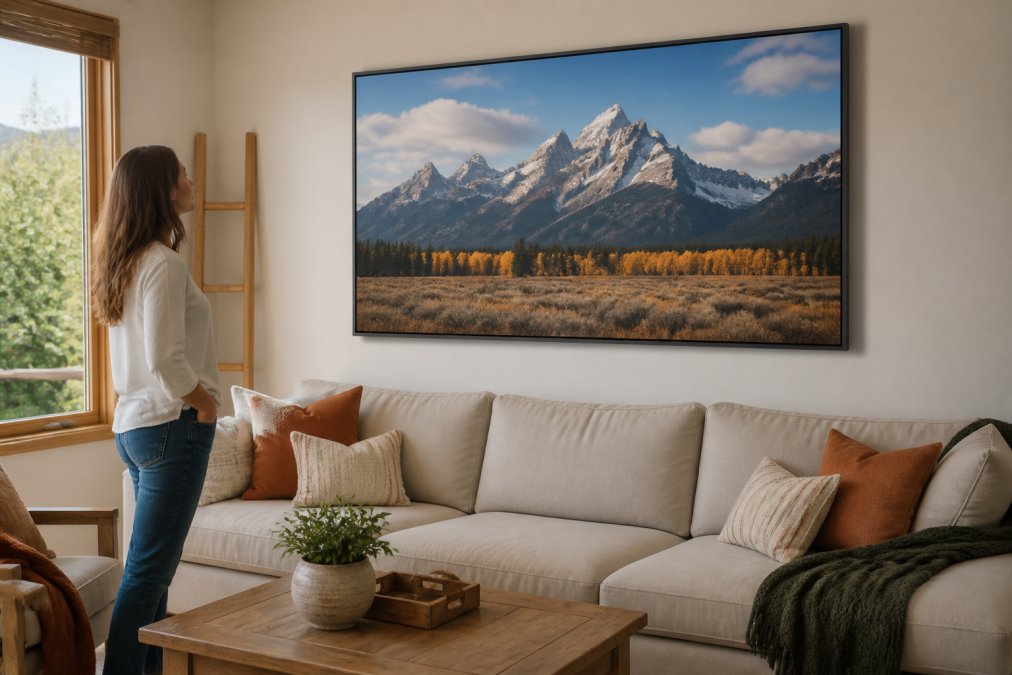
Famous Mormon Barn in the Tetons →
What "Archival" Actually Means, in Measurable Terms
Archival quality is not a vibe. It is a set of measurable properties:
- Ink type. Pigment inks (often called archival pigment or giclée) resist fading far better than the dye-based inks used in cheap consumer printing. Pigment particles sit on the paper surface and are far more stable under light than dye molecules that soak into the coating.
- Paper pH. Acid-free and lignin-free papers are the baseline. Acidic paper yellows and becomes brittle over years. Look for "acid-free," "buffered," or "100% cotton rag" language, and a paper weight of 250 gsm or higher.
- Lightfastness rating. This is the one number that actually predicts fading. Print permanence testing (the kind organizations like Wilhelm Imaging Research publish) expresses lightfastness in years under specific display conditions. A print rated for 100+ years under glass is genuinely archival; a print with no rating is a guess.
- Glazing. Behind UV-filtering glass or acrylic, a pigment print can hold its color for generations. Without it, even an archival print will shift within a decade on a sunlit wall.
The Buyer's Verification Checklist
Use this before you check out on any print marketed as museum quality:
- Ink type is stated as pigment or giclée, not "photo ink" or "dye"
- Paper is described as acid-free, buffered, or cotton rag
- Paper weight is 250 gsm or higher
- A lightfastness or print permanence rating is published
- Framing options include UV-filtering glass or acrylic
- The photographer is named and the image is their own work, not licensed stock
Why This Matters for Longevity and ROI
Archival pigment inks paired with acid-free paper and proper framing behind UV-filtering glass are what let a well-made print hold its color for generations. That longevity is the real difference between a $20 poster and a $200 print, and it is why fine art print sales have grown even as the broader art market contracted 12%, according to Daniel Forster Photography's 2026 fine art market analysis.
Consumer Lab vs. Professional Printing: What Actually Changes
Consumer labs and professional printing services differ mainly in color management, paper options, and quality control. A consumer lab optimizes for speed and low cost; a professional printer optimizes for accuracy and consistency.
Print Longevity and Real ROI for Your Home
A print's real return is measured in years on the wall, not resale value. A $150 framed print that looks good for fifteen years costs about $10 a year, less than a single streaming subscription. That is the ROI that matters for home decor.
Frequently Asked Questions
What defines museum-quality photography prints?
Museum-quality prints use archival papers and pigment inks rated to resist fading for decades, with color accuracy checked against a calibrated profile. Paper weight typically starts around 200 gsm, and finishes like matte, lustre, or giclée canvas are chosen to match the image's tonal range. DPI resolution and aspect ratio also matter: a file printed below 300 DPI at the final size will show softness up close. The term describes materials and process, not just the photograph itself.
Is it better to buy limited edition or open edition prints?
It depends on why you are buying. Limited edition prints are capped at a set number, often signed and numbered, which supports resale value and a sense of exclusivity. Open edition prints can be reproduced indefinitely, so they usually cost less and are easier to replace if a size sells out. For a first purchase or a rental where wall space may change, an open edition keeps things flexible. For a statement piece you plan to keep, a limited edition adds long-term collectible appeal.
How can I tell if an online photography print is high quality before ordering?
Look for the specifics a serious print shop publishes: paper brand and weight, ink type, color profile, and maximum print size at full resolution. Check whether the photographer names the location and shooting details, which signals original work rather than stock resale. Reviews and independent testing help too; Wirecutter has repeatedly ranked certain labs highly for print consistency. If a listing shows only a thumbnail and a price with no material details, treat that as a warning sign.
Are photography prints worth it compared to printing photos myself?
Consumer lab and home printing usually costs less per sheet, but the gap narrows once you factor in archival paper, pigment ink, and the trial prints needed to get color right. Professional printing also handles large formats and gallery wraps that desktop printers cannot match. For a small snapshot, DIY makes sense. For wall art you want to last years without yellowing or fading, professional printing is the more reliable path, and the price difference is often smaller than expected.