
What Is Fine Art Landscape Photography? A 2026 Guide
Table of Contents
- Defining Fine Art Landscape Photography in 2026
- The Four Pillars of Landscape Photography: Technical Skill, Artistic Vision, Narrative, and Composition
- Fine Art Photography Printing Standards: Archival Quality and Limited Editions
- How to Collect Fine Art Photography for Your Home
- Sustainable Practices for Collecting Fine Art Photography
- The Business of Fine Art Landscape Photography: Galleries, Curation, and Legal Considerations
- Conclusion
- Frequently Asked Questions
Last Updated: September 28, 2026
Defining Fine Art Landscape Photography in 2026
Fine art landscape photography is a genre in which the photographer treats a natural scene as the raw material for a personal artistic statement, prioritizing creative intent, composition, and emotional resonance over documentary accuracy. The distinction matters more this year than ever: auction sales of fine art photographs climbed 19.1% in 2025 to $40.4 million across Christie's, Sotheby's, and Phillips, according to Bob Clark Photography's market analysis of museum-quality landscape prints. Meanwhile, the broader art market contracted 12%, which tells you buyers are being selective. They want work with a point of view.
Below, we'll break down what separates fine art landscape from the snapshot tradition, how the printing and editioning side actually works, and how to collect pieces you'll still love in a decade.
How It Differs from Traditional Landscape Photography
Traditional landscape photography documents a place. Fine art landscape photography interprets it.
The documentary photographer captures what was there, faithfully. The fine art photographer captures what it felt like to stand there, then uses every tool available, from composition to post-processing, to translate that feeling for someone who wasn't present. A conventional landscape shot answers "what does this location look like?" A fine art print answers "why should you care about this location?"
That shift in intent changes everything downstream. It affects when you shoot, how you compose, how far you push color grading, and which images are even worth printing. It also changes the business model: fine art prints are sold as limited editions with archival materials, not as licensed stock.
The Four Pillars of Landscape Photography: Technical Skill, Artistic Vision, Narrative, and Composition
Four capabilities carry a fine art landscape photograph: technical proficiency, artistic vision, narrative, and composition. Weakness in any one of them shows up in the final print, and collectors notice.
Technical skill gets you a clean file with full dynamic range, no blown highlights, and sharp detail corner to corner. Artistic vision determines whether that technically perfect file is interesting. Narrative gives the image a reason to exist beyond decoration. Composition is the grammar that holds it all together: light and shadow, leading lines, negative space, and the deliberate placement of every element in the frame.
Industry surveys back up how seriously photographers are treating this balance. According to ShootProof's 2026 State of Photography report, 85% of photographers report a surge in art, landscape, and documentary work, and nearly 50% now use AI tools weekly, mostly for the administrative side of the business rather than the creative work.
Technical Proficiency and Dynamic Range
Dynamic range is the measure of how much detail a camera can hold simultaneously in the brightest highlights and darkest shadows. For landscape work, it's the specification that matters most, more than megapixels.
A scene like the Grand Canyon's south rim in winter, one of the images in our collection, spans an enormous tonal range: bright snow, deep canyon shadow, and everything between. Cameras with limited dynamic range force a choice between blown-out snow and crushed shadows. Modern sensors handle most of that range natively, and graduated filters or bracketed exposures cover the rest. Long exposure technique extends the same principle to water and clouds, smoothing motion into something more contemplative than the eye sees in real time.
Developing Your Artistic Voice and Visual Storytelling
Your artistic voice is the set of choices you make consistently enough that viewers recognize your work before they see your name. It develops through deliberate repetition, not inspiration.
Visual storytelling in landscape work rarely means a literal sequence of events. It means the image implies a moment: the last light hitting a ridge, fog lifting off a lake, a storm breaking. Photographers build that implication through subject matter selection, light and shadow, and post-processing decisions that stay consistent across a body of work.
What most guides miss is that voice is subtractive. Beginning photographers add: more locations, more edits, more saturation.
Fine Art Photography Printing Standards: Archival Quality and Limited Editions
Archival quality means a print will resist fading and color shift for decades under normal display conditions, typically rated at 100 years or more when pigment inks meet acid-free papers and proper framing. It's the technical foundation that makes a fine art print a collectible rather than a poster.
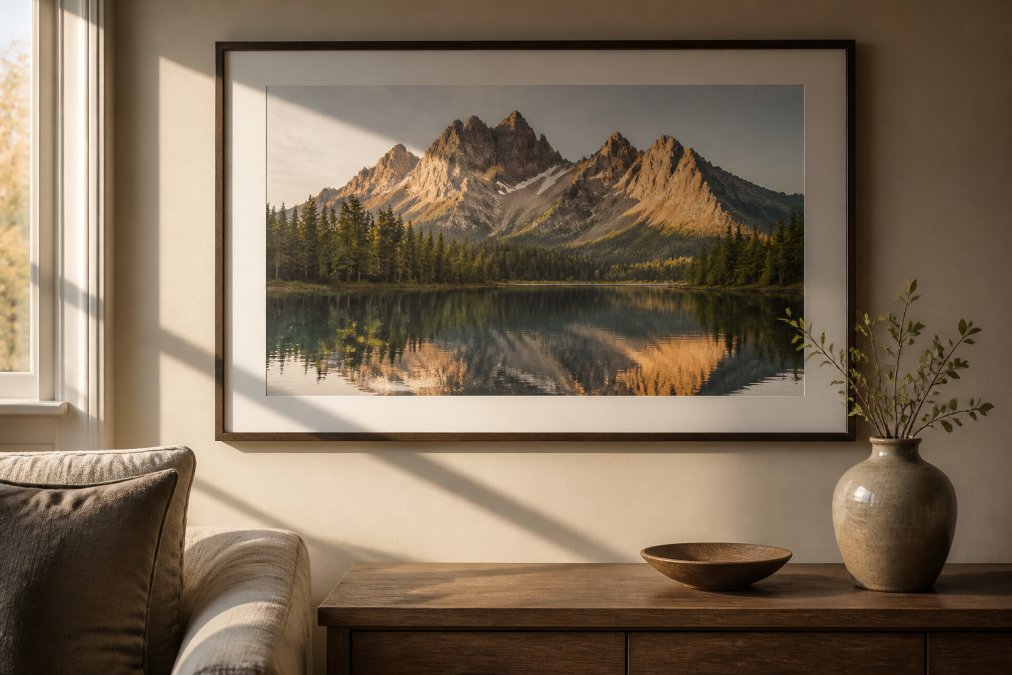
The standards stack in layers:
- Paper or substrate: Cotton rag, baryta, or fine art canvas, all acid-free and ideally certified to ISO 9706 or similar permanence standards
- Inks: Pigment-based rather than dye-based, rated for longevity by independent testing labs
- Framing: UV-filtering glazing and acid-free matting to prevent yellowing and condensation damage
- Editioning: A fixed print run, numbered and signed, with no reprints once the edition sells out
How to Collect Fine Art Photography for Your Home
Collecting fine art photography starts with one question: what do you want the room to feel like? Answer that before you browse, and the shortlist builds itself.
A few practical filters narrow the field fast:
- Subject connection: Buy images of places you've been or want to go. A Convict Lake or Sawtooth Mountains print carries more meaning if the landscape is part of your story.
- Consistency with the room: Match the image's dominant palette to your existing furniture and wall color rather than fighting it.
- Edition and provenance: Confirm the print is signed, numbered, and from an actual photographer's original work, not resold stock.
- Return policy: If you're buying as a gift, check exchange terms before you order.
Choosing the Right Size and Print Medium
Size is the decision buyers get wrong most often. A print that looks commanding on a screen can look lost on a large wall, and the reverse is just as common.
Sustainable Practices for Collecting Fine Art Photography
Sustainable practices for collecting fine art photography mean buying fewer, better pieces and caring for them so they last.
Practical habits that extend a collection's life:
- Hang prints away from direct sun and heat sources like radiators and fireplaces
- Keep humidity stable; swings cause paper to cockle inside the frame
- Dust with a dry microfiber cloth, never spray cleaner on glazing
- Store unframed prints flat, interleaved with acid-free tissue, in a cool dark place
- Buy from photographers who print on demand rather than holding large speculative inventory
The Business of Fine Art Landscape Photography: Galleries, Curation, and Legal Considerations
Selling fine art landscape photography runs on three engines: direct sales, gallery representation, and licensing.
Conclusion
The fine art landscape market is growing, which means buyers are rewarding work with genuine artistic intent, archival craft, and a clear point of view.
Frequently Asked Questions
What qualifies as fine art photography?
Fine art photography is created primarily for artistic expression rather than commercial or documentary purposes. It reflects the photographer's creative intent and personal vision. According to 2026 industry research, it includes landscape photography subsets that capture pristine natural environments and abstract compositions. Unlike snapshots, fine art images are crafted with deliberate composition, lighting, and post-processing to evoke emotion and tell a visual story.
How does fine art landscape photography differ from traditional landscape photography?
Traditional landscape photography often documents a scene as accurately as possible, while fine art landscape photography prioritizes artistic vision, narrative, and emotional impact. The fine art approach involves careful composition, creative post-processing, and a distinct artistic voice. In 2026, this distinction matters more than ever: auction sales of fine art photographs surged 19.1% in 2025, reaching $40.4 million, showing collectors value the artistic interpretation over simple documentation.
What printing standards are required for fine art photography?
Fine art photography printing standards require archival-quality materials that resist fading for decades. This means using pigment-based inks and acid-free, cotton rag papers or museum-grade canvas. Limited edition prints should be numbered and signed by the artist. These standards ensure the print retains its value and appearance over time. When you buy from a reputable photographer, ask about the paper type, ink longevity, and whether the edition is limited.
How do I determine the value of a fine art landscape print?
Value depends on several factors: the photographer's reputation, edition size, print quality, and provenance. Limited edition prints with smaller run numbers typically hold more value. In 2025, the broader art market contracted 12%, yet fine art print sales grew, indicating strong demand for high-quality photography. Authenticity matters too, so always verify the print is an original from the photographer, not a resold stock image.
What are sustainable practices for collecting fine art photography?
Sustainable collecting means choosing archival prints that last generations, reducing the need for replacements. Look for photographers who use eco-friendly papers and non-toxic inks. Buying limited editions supports artists directly and avoids mass-produced decor. Additionally, framing with UV-protective glass and hanging art away from direct sunlight preserves the print, making your purchase a long-term investment rather than a disposable item.
Can you give me some examples of fine art landscape photography?
Examples include iconic views like Half Dome at Yosemite from Glacier Point, the Grand Canyon south rim in winter, or the Sawtooth Mountains near Stanley, Idaho in spring. These images go beyond documentation, using light, shadow, and composition to create a mood. Photographers like Bob Clark capture the Rocky Mountain west, offering prints that function as museum-quality wall art for homes and offices.